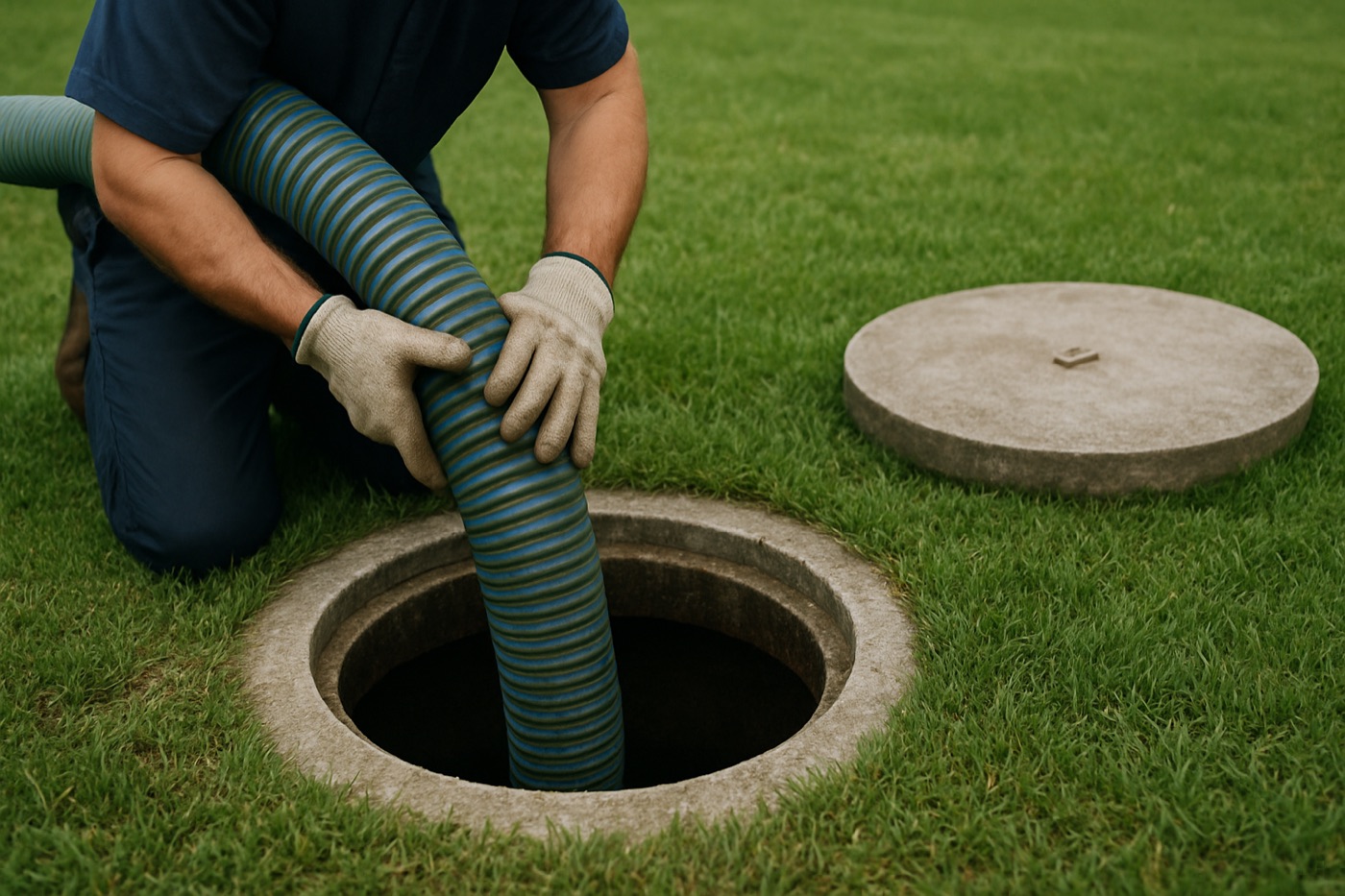
What a complete pump-out includes
A real pump-out empties both compartments of the tank, breaks up and removes the sludge blanket and the floating scum layer (not just the easy liquid in the middle), backflushes as needed, and includes a look at what the empty tank reveals — baffle condition, inlet and outlet, water coming back in when it shouldn’t. That last part matters: an empty tank is the one time a pro can actually see the early signs of trouble. If the truck leaves after ten minutes and the invoice just says "pumped," you paid full price for half a job.
What moves the price
Access and lids. $375–$550 covers a typical tank up to 1,000 gallons with lids at or near the surface. If the lids are buried — common on older Caldwell County systems that predate risers — digging them up adds $75–$150 ($450–$700 all-in). The permanent fix is risers ($150–$400 installed while the tank is open): after that, every future pump-out is the cheap kind. Bigger tanks, long hose pulls, and heavy solids from years of neglect also add cost — all things an honest dispatcher will ask about on the phone, not surprise you with on the invoice.
The 3–5 year rule, and when to ignore it
Three to five years is right for most households. Pump closer to every 3 with a garbage disposal, a big family, or a smaller/older tank; you can stretch toward 5 with light use. But the calendar loses to symptoms every time: slow drains through the whole house, gurgling, odors near the tank, or a lush green stripe over the drainfield in August all say "now," whatever the calendar says. And if you’re on an aerobic system, your 3-a-year inspections track sludge — your maintenance provider will tell you when pumping’s due.
One Caldwell County note
If your place is in the Plum Creek watershed — most of the 183 corridor is — keeping pump-out receipts is quietly valuable. The creek’s impaired status means septic compliance gets more attention here every year, and a paper trail of routine maintenance is the easiest possible answer if the county ever asks. It’s also exactly what a buyer’s inspector wants to see when you sell.
Common questions
How much does septic pumping cost in Lockhart?
$375–$550 for a typical accessible tank; $450–$700 if lids need excavation. Risers added during the visit ($150–$400) make every future visit the cheaper kind.
How do I know when my tank is full?
By schedule (3–5 years) or by symptoms: whole-house slow drains, gurgling fixtures, odors outside, or soggy/lush ground over the field. A tank that backs up into the house is past full — that’s an emergency call.
Do additives mean I can skip pumping?
No. No additive removes accumulated solids — only the truck does. Most systems need nothing added at all; save the monthly additive money toward the pump-out.
Should I be home for the pump-out?
Helpful but not required if the crew can find and access the tank. Being there for the first visit pays for itself — you’ll learn where your lids are, what condition things are in, and get straight answers while the tank is open.
Book a pump-out
Tell us where the property is and when it was last pumped (best guess is fine). A licensed local pro will call you back — usually the same day.
Got it — expect a call back shortly to schedule.