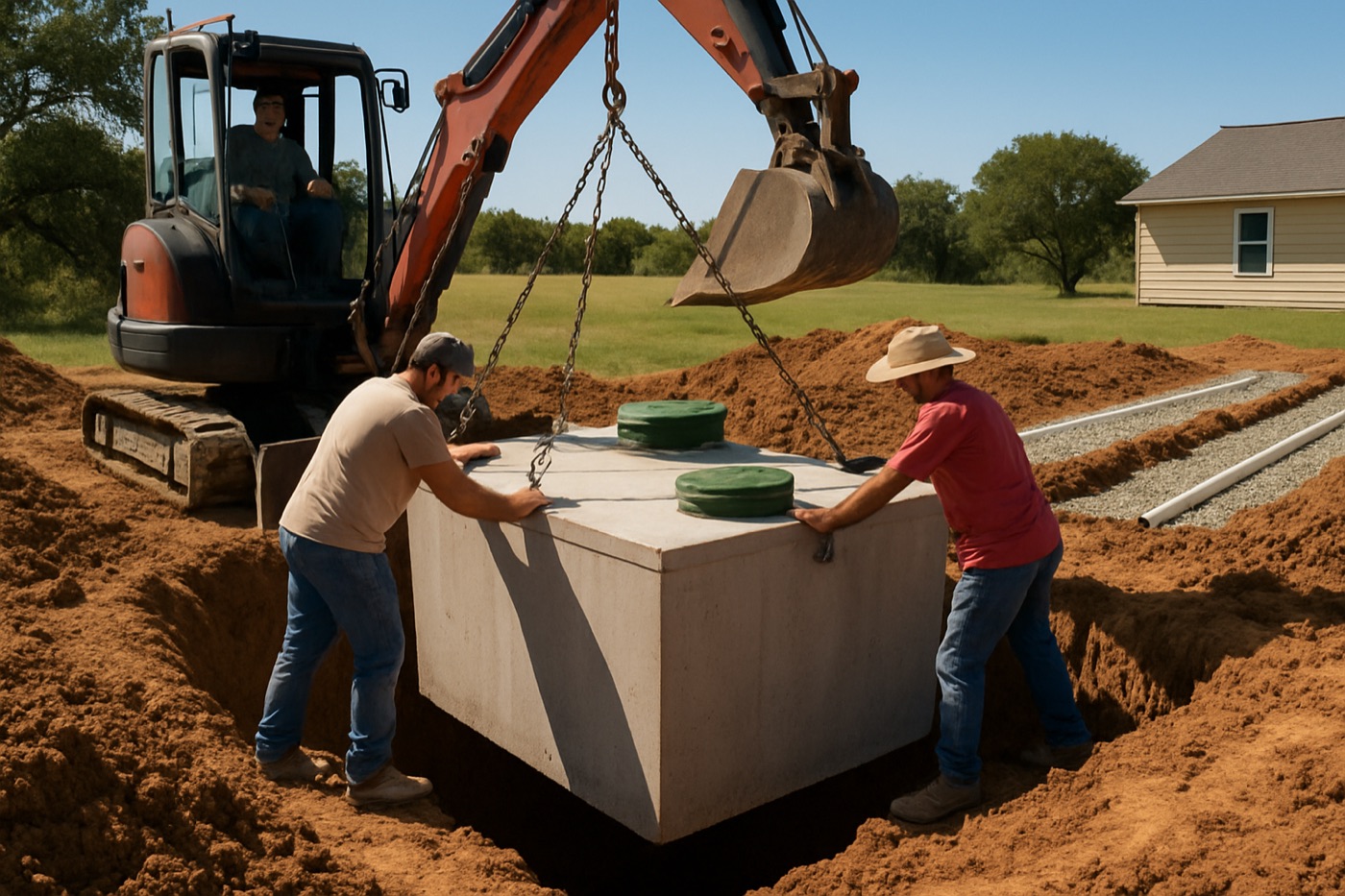
Repairs: the usual suspects
The parts that fail are predictable. Baffles rot out and let solids into the drainfield (replace them the visit you find them — $250–$600 — because the field they protect costs a hundred times more). Lids and risers crack and become safety issues. Floats and alarms stick. On aerobic systems, sprayer pumps and compressors are the wear items — $450–$1,200 replaced. The pattern in every case: caught early it’s a service call, caught late it’s a project. This is exactly what pump-outs and maintenance visits are for.
The drainfield question
The drainfield is the expensive organ. Sewage surfacing over the field, mushy ground in dry weather, or backflow into a freshly pumped tank all point to a field that’s saturated or biologically clogged. Sometimes rest-and-rotate or remediation buys years; often a failed field means replacement — which in Caldwell County means a permit, a site evaluation, and honestly assessing whether the soil that failed once will support the same design again, or whether the fix is stepping up to an aerobic system. Anyone who quotes a drainfield replacement over the phone without a site visit is guessing with your money.
New systems: what drives the price
Soil and site decide the design. The county requires a site evaluation; sandier soils west of town perc differently than blackland east, and lot size, slope, wells and creek setbacks all shape what’s legal to build. Where a conventional trench system works, expect $4,000–$8,500 installed and permitted. Where it doesn’t — tight soils, small lots, Plum Creek setbacks — an aerobic system runs $9,500–$18,000+, plus its $250–$400/yr maintenance contract forever after. The permit itself is $400 conventional / $450 aerobic through the Caldwell County Sanitation Department (1700 FM 2720, (512) 398-1803), and a good installer handles that paperwork as part of the job.
Get the bid in writing — all of it
A real install bid names the system type and size, includes the site evaluation and permit, states who does the electrical (aerobic systems need a circuit), covers final grading and cleanup, and specifies the warranty on tank and components. The $2,000-cheaper bid that’s silent on half of those isn’t cheaper — it’s incomplete, and you find out at final inspection.
Common questions
How much does a new septic system cost in Caldwell County?
Conventional: $4,000–$8,500 installed and permitted where soils allow. Aerobic: $9,500–$18,000+, plus the ongoing maintenance contract. The county site evaluation determines which one your land can legally support.
My drains backed up. Is my system dead?
Usually not. Most backups are a full tank ($375–$550 pump-out) or a line/baffle problem ($250–$1,500). It’s only field failure when symptoms persist after pumping — that’s the assessment worth doing right.
Do I need a permit to repair my septic system?
Like-for-like minor repairs (lids, baffles, pumps) generally don’t need one; anything altering the system — new tank, new field, conversion to aerobic — goes through the Caldwell County Sanitation Department ($400/$450). Unpermitted alterations surface at the worst time: when you sell.
How long does a new install take?
Permitting and site evaluation typically run a few weeks; the dig itself is usually 2–4 days of machine work plus inspections. Weather matters — this county’s clay doesn’t like being worked wet, and good installers wait for the window.
Get a repair or install quote
Tell us what’s happening — or what you’re building. A licensed local pro will call you back, usually the same day.
Got it — expect a call back shortly to talk through the job.